SB 1128 Died: Florida Time-Sharing Law Unchanged (2026)
Florida SB 1128 did not take effect. Here is what actually governs time-sharing enforcement and parenting-plan hearings under current F.S. Chapter 61.
The short answer
Florida SB 1128 did not take effect. Despite headlines suggesting faster time-sharing enforcement and priority parenting-plan hearings, the bill died in the Senate Appropriations Committee on Criminal and Civil Justice on March 13, 2026. Florida time-sharing enforcement is still governed by existing law under Chapter 61, unchanged for the 2026 session.
The news hook
If you have seen claims that a new Florida law is speeding up time-sharing enforcement or guaranteeing priority hearings for parenting-plan disputes, those claims are inaccurate. Senate Bill 1128 (2026) proposed exactly that kind of reform, but it never became law.
The bill cleared the Judiciary Committee on February 10, 2026 with an 11-0 vote. It then stalled and died in the Appropriations Committee on Criminal and Civil Justice on March 13, 2026 before the legislative session ended. A bill that dies in committee does not take effect on July 1 or any other date. It simply does not become law.
The document circulating as a source for the "new law" is the bill's pre-committee Judiciary analysis. That is a staff analysis of a proposed bill, not a signed act. It describes what the legislation would have done if enacted, not what Florida law currently requires.
What SB 1128 would have changed
Understanding what died helps explain what did not change. As drafted, CS/SB 1128 would have:
- Required courts to prioritize certain time-sharing matters on their calendars, rather than leaving scheduling entirely to judicial discretion.
- Established specific procedural requirements for hearings on motions involving temporary parental responsibility and time-sharing.
- Directed the Office of the State Courts Administrator to publish annual reports on evidentiary hearings by judicial circuit.
- Converted certain discretionary parenting-plan determinations into mandatory ones in specified proceedings.
None of these provisions are now in force. Courts retain their existing discretion over scheduling, and there is no new statutory reporting mandate on time-sharing hearings.
Legal implications for Florida families
For parents and divorcing spouses, the practical takeaway is continuity. The rules you plan around today are the same rules that applied before the 2026 session.
Time-sharing and parenting plans in Florida are governed by Chapter 61 of the Florida Statutes. The court determines time-sharing based on the best interests of the child under the factors in F.S. 61.13(3). Every dissolution involving minor children requires a parenting plan under F.S. 61.13(2)(b), and that plan must address the time-sharing schedule, decision-making, and how the parents will communicate.
Enforcement of an existing time-sharing order also runs through Chapter 61. F.S. 61.13(4) addresses remedies when a parent refuses to honor the time-sharing schedule, including make-up time-sharing, modification, contempt, and fee-shifting. These enforcement tools did not expand or contract as a result of SB 1128, because SB 1128 never became law.
It is also worth separating this from the larger 2023 reform. Senate Bill 1416 (2023) made significant changes to Florida alimony, eliminating permanent alimony and revising the durational framework. SB 1416 is real, enacted law. SB 1128 is not. Do not conflate the two — one reshaped alimony and took effect, the other addressed time-sharing procedure and died in committee.
Florida-specific analysis
Florida already presumes that equal, or roughly equal, time-sharing is in the best interests of the child. That rebuttable presumption, added in 2023, remains the starting point in contested cases. SB 1128 did not touch that presumption; it dealt with how quickly and under what procedures those disputes get heard.
Because SB 1128 failed, hearing timelines in Florida time-sharing cases continue to depend on local circuit practice and the individual judge's docket rather than a statewide statutory priority mandate. Some circuits move quickly on parenting-plan disputes; others carry heavier backlogs. There is no uniform, statutorily required timetable, and the 2026 session did not create one.
For most people reading this, the more relevant point is that the vast majority of Florida divorces never require a contested time-sharing hearing at all. When both spouses agree on the parenting plan, the case proceeds as an uncontested dissolution and the court simply reviews and approves the agreed plan. Procedural-priority reforms like SB 1128 are aimed at contested fights, not agreed cases.
Practical takeaways
- Do not rely on SB 1128 for any right or timeline. It is not law.
- Verify legal-change claims against the official Florida Legislature record before acting. A pre-committee staff analysis is not an enacted statute.
- If you have an existing time-sharing order that a co-parent is violating, your remedies come from F.S. 61.13(4), not from any 2026 bill.
- If you and your spouse agree on the parenting plan, you likely do not need a contested hearing. An uncontested dissolution with an agreed parenting plan is the fastest and least expensive path.
- The 2023 alimony reform (SB 1416) is real and still governs alimony; the 2026 time-sharing procedure bill (SB 1128) is not.
At the Law Office of Antonio G. Jimenez, we handle uncontested Florida divorces for a $750 flat attorney fee, including cases with minor children, where the package adds a parenting plan, a child support guidelines worksheet, and a UCCJEA affidavit. The court filing fee (about $425) and any notary fees are separate. If you and your spouse agree, you can learn more on our uncontested divorce page or ask questions through Victoria, our AI assistant.
For related coverage of this bill, see Florida SB 1128 Time-Sharing Hearing Bill Died (2026) and Florida SB 1128 Died in Committee: No New Time-Sharing Deadlines (2026).
Legal disclaimer
This article is provided by Antonio G. Jimenez, Esq., Florida Bar No. 21022, for general informational purposes only and does not constitute legal advice, nor does it create an attorney-client relationship. Legislative status and statutes change; verify current law with the Florida Legislature and consult a licensed Florida attorney about your specific situation.
Related Topics
Ready to Get Started?
If you and your spouse agree, here's how we can help:
Uncontested Divorce
$750Full representation to judgment — with or without minor children
Attorney-prepared and reviewed before filing. Court filing fee and remote notary not included.
Not sure if you qualify?
Victoria can talk through your situation and let you know if an uncontested divorce is a fit.
About the Author
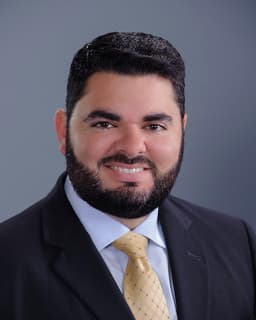
Antonio G. Jimenez, Esq.
Florida attorney since 2006 · Florida Bar #21022 · LL.M. Trial Advocacy
Antonio is the founder of FloridaDivorce.law and creator of Victoria AI, our AI legal intake specialist. A U.S. Navy veteran and former felony prosecutor, he has handled thousands of family law cases across Florida. He built this firm to deliver efficient, transparent legal services using technology he developed himself.
Have questions? Ask Victoria AIFrequently Asked Questions
Did Florida SB 1128 take effect in 2026?
No. SB 1128 did not take effect. It died in the Senate Appropriations Committee on Criminal and Civil Justice on March 13, 2026, and never became law. Any claim that it created faster time-sharing enforcement or priority parenting-plan hearings is inaccurate.
What law governs Florida time-sharing enforcement now?
Chapter 61 of the Florida Statutes still controls. Time-sharing is decided on the best interests of the child under F.S. 61.13(3), parenting plans are required under F.S. 61.13(2)(b), and enforcement remedies for a violated schedule come from F.S. 61.13(4). None of this changed in the 2026 session.
What would SB 1128 have done if it passed?
It would have required courts to prioritize certain time-sharing matters, set procedural rules for temporary parental responsibility and time-sharing hearings, required annual state reports on evidentiary hearings by circuit, and made certain parenting-plan determinations mandatory. Because it died in committee, none of that is law.
Is this related to the 2023 Florida alimony reform?
No. The 2023 reform was SB 1416, which eliminated permanent alimony and revised the durational framework. That bill is enacted law. SB 1128 is a separate 2026 time-sharing procedure bill that failed. Do not confuse the two.
Do I need a contested time-sharing hearing for my divorce?
Usually not. If you and your spouse agree on the parenting plan, the case proceeds as an uncontested dissolution and the court reviews the agreed plan without a contested hearing. Procedural-priority proposals like SB 1128 are aimed at contested disputes, not agreed cases.
Still Have Questions?
Every situation is different. Chat with Victoria AI to get personalized guidance based on your specific circumstances.
Ask Victoria AIRelated Articles
More from our News & Commentary series
Eric Dane's Death and Gayheart's Withdrawn Divorce: Florida Law Lessons
Rebecca Gayheart withdrew her divorce from Eric Dane after his ALS diagnosis. Here's what Florida law says about pausing divorce when a spouse becomes ill.
8 min readNews & CommentaryCensus Bureau Study: Divorce Cuts Children's Income by 13%
A Census Bureau study finds parental divorce reduces children's adult income by 9-13%. Here's what this means for Florida custody and parenting plans.
8 min readNews & CommentaryFlorida HB 1391: Judge Report Cards Could Transform Family Court
Florida bills HB 1391 and SB 452 would create public performance ratings for family court judges. Here's what it means for your divorce case.
8 min readNews & CommentaryBianca Censori Reveals Kanye Marriage Struggles: Florida Divorce Lessons
Bianca Censori's Vanity Fair tell-all reveals key divorce issues. A Florida attorney breaks down overlapping relationships, mental health, and controlling spouses.
8 min readNews & CommentaryKalil v. Kalil: Viral Livestream Lawsuit Tests Post-Divorce Speech Limits
Former NFL player Matt Kalil sues ex-wife Haley over viral livestream. What this privacy case means for Florida divorcing spouses sharing on social media.
8 min read